

What the brain needs to thrive?
A simple guide to how the brain and nervous system keep us regulated and well.

Good design starts with understanding the people you’re designing for. This series, What Do Humans Need To Thrive?, draws on research across diverse scientific and human practices. I’m a designer making my way through the research before building something real. Take what’s useful, and dig deeper into what you need.
We start with the brain and the nervous system as they set the tone for everything that happens inside us. They shape our thoughts, reactions, and the invisible climate we each carry. When we understand how this inner system works, it becomes easier for us to work with our biology rather than against it.
Five core human needs
For the nervous system to stay regulated and well, these five needs show up across neuroscience, psychology, emotional development:
Safety
We need to feel safe from physical and emotional threat. Without this, the brain shifts into defence, and every other need becomes secondary.Predictability
The brain likes to ‘know’.
Predictable rhythms, consistent responses, and clear expectations help the nervous system relax. Constant uncertainty is one of the strongest sources of stress.Connection
Humans are wired for closeness through warm relationships and shared emotional experiences.Emotional Stability
The brain needs access to calm. This includes co-regulation from others, safe space to process emotions (move the brain from protection mode to a safe space where we can think with more clarity) and opportunities for repair when things rupture.Belonging
We need to feel accepted as we are. We need to feel we matter, and without having to constantly earn our place.
Safety is the foundation of every other human need
Our brain’s top priority is to keep us alive.
Because of that, the nervous system reacts to anything that feels threatening. It doesn’t make a clear distinction between physical and emotional threat. That means, a harsh tone, rejection, or shame can activate the same survival pathways that physical danger does.
Many adults have the ability to pause before acting on their fight-flight-freeze impulses, even when their body is sounding the alarm. But under pressure, most of us still fall back on our older impulse system.
For me, those impulses show up as ‘loud thoughts’ that jump in before I can think clearly. I’ll tell myself something dramatic like “This is so embarrassing! I just want to disappear right now! After a brief pause, it’s as if another voice appears to say “It’s really not that bad because we’ll never see these people again.”
Children can’t override these impulses yet because their nervous system reacts instantly. The prefrontal cortex, which helps with impulse control and reasoning, is the slowest part of the brain to mature. It continues developing into the mid-twenties. This growth depends on safety, connection, co-regulation, predictable support, and modelling from caregivers. All of this slowly builds the inner narrator that helps them make sense of their impulses. And it is only between ages 7 to 12 when they can start using simple self-talk when they are calm.
For parents, this creates a layered challenge. Not only are we managing our own safety cues, but we also absorb the signals from our children, partner, and the family system as a whole. When our own nervous system is overwhelmed, it becomes much harder to create safety for others.
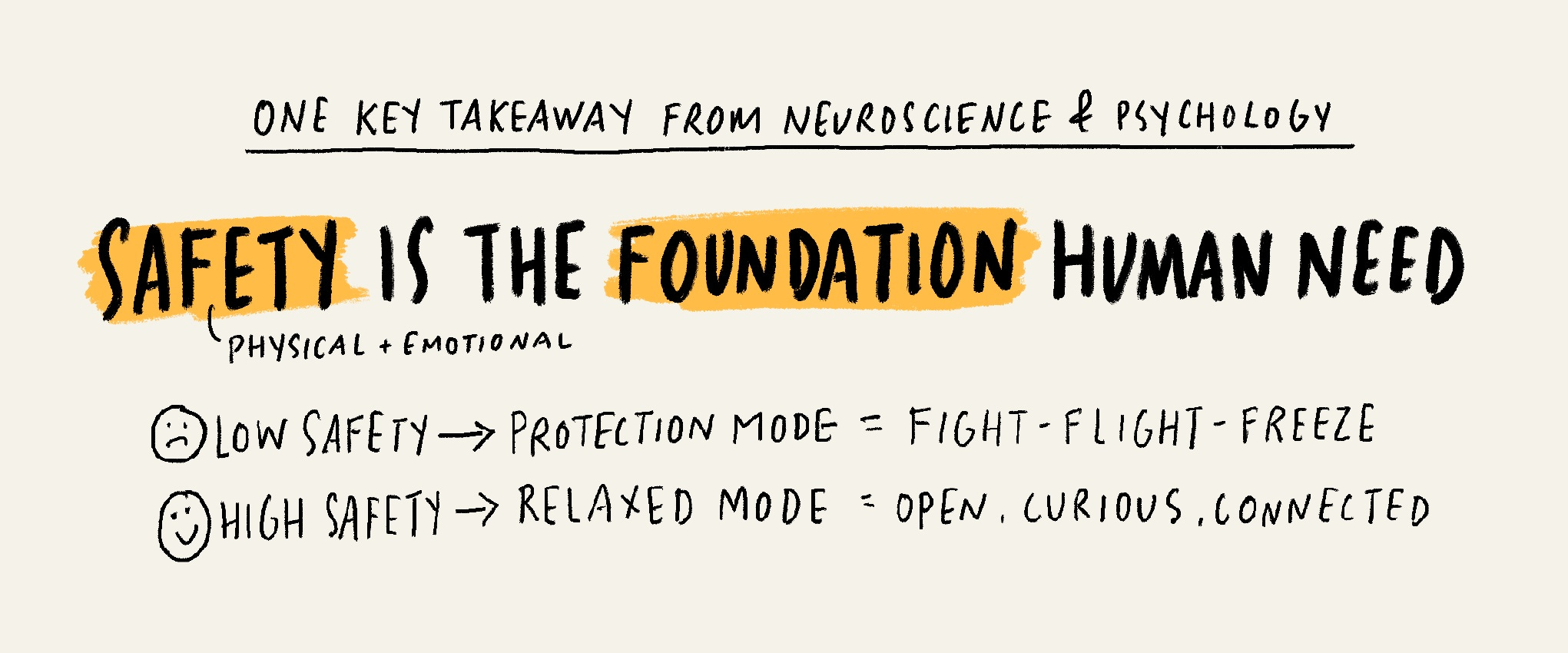
Just to be clear, this does not mean that safety must be present at all times. No human gets that. What we are aiming for is enough safety over time. A generally predictable emotional climate with natural moments of rupture and repair. When we understand how experiences shape the nervous system, safety becomes a key guiding principle for the culture we build at home.
Common Misconceptions
“I didn’t grow up in a safe environment as a child, and neither did many of my peers. We turned out fine and relatively happy. I know safety is important, but is it really that important?”
The truth is, the brain is brilliant at survival. When safety is missing, it adapts in creative ways to protect us. It might push us to be hyper-independent, overachieve, shut down our emotions, people-please or stay hyper vigilant. These patterns can look like strength and can even help us succeed in our world. But they often come with hidden costs in the form of chronic stress, anxiety, exhaustion, difficulty forming or maintaining close relationships, or a lifelong pattern of disconnecting from our own needs.
This is not thriving as humans.
This is surviving inside society’s impossible expectations.
“Doesn’t lack of safety build resilience?”
It can look that way from the outside. Many adults who grew up with little safety are hardworking, independent and resourceful. But according to science, the lack of safety does not build resilience, but survival mode.
Humans become resilient when they face stress with enough safety and support. Just enough predictability, connection and co-regulation for the nervous system to learn “Stress is part of life. But I’m not in danger.”
We do not withhold safety from our children so they can learn resilience. That would be like withholding food so they can learn to survive hunger. Survival should not be the lesson.
“I have been prioritising discipline and skills, not safety. I might have caused some damage along the way. How do I fix that?”
Humans can heal from experiences that were not safe. And many of us are doing that work as adults. That also means, parents can change course at any point. If you feel that they have not been prioritising safety at home, they can start now.
When we learn to give our child what we did not get, their energy can go into growing, learning and connecting instead of recovering from stress. What you offer now becomes the foundation their nervous system builds on. It is never too late to shift the climate at home. Small changes in safety and connection can make a meaningful difference.
Related Posts: What do humans need to thrive?