

We forget what it really feels like to learn
A frustrating learning experience that reminded me what it really feels like to learn, and why that matters for our kids

I was in my 40s when I learned to drive. And I had to learn in Tel Aviv, where drivers are not exactly known for their patience, so it was often stressful. My driving instructor was my window into local culture, and our conversations helped distract me from the frustration of learning.
I remember asking a lot of questions. Very specific ones about steps and timing. I wanted everything broken down clearly so I could get it right. At first, he tried to explain patiently. But after a few times, he’d shake his head and laugh, “You are a little crazy. No one asks so many questions. Just follow my instructions and do it.”
Now that I can drive, those questions probably sound ridiculous. Driving is often about feel and intuition. But at that time, I wanted real-time instructions and real-time feedback, so I could make sure I was doing it right.
There was one moment that stuck with me.
My instructor barked at me when I made a mistake, and I snapped back. “I know I am supposed to do that. But I don’t know why I am not doing it, ok!”
Later that day, I sat with my eight-year-old, trying to teach him something. And I realised something uncomfortable.
We sounded the same. The same frustration, same resistance, and the same tone I had earlier labelled as unmotivated, disrespectful, and defiant.
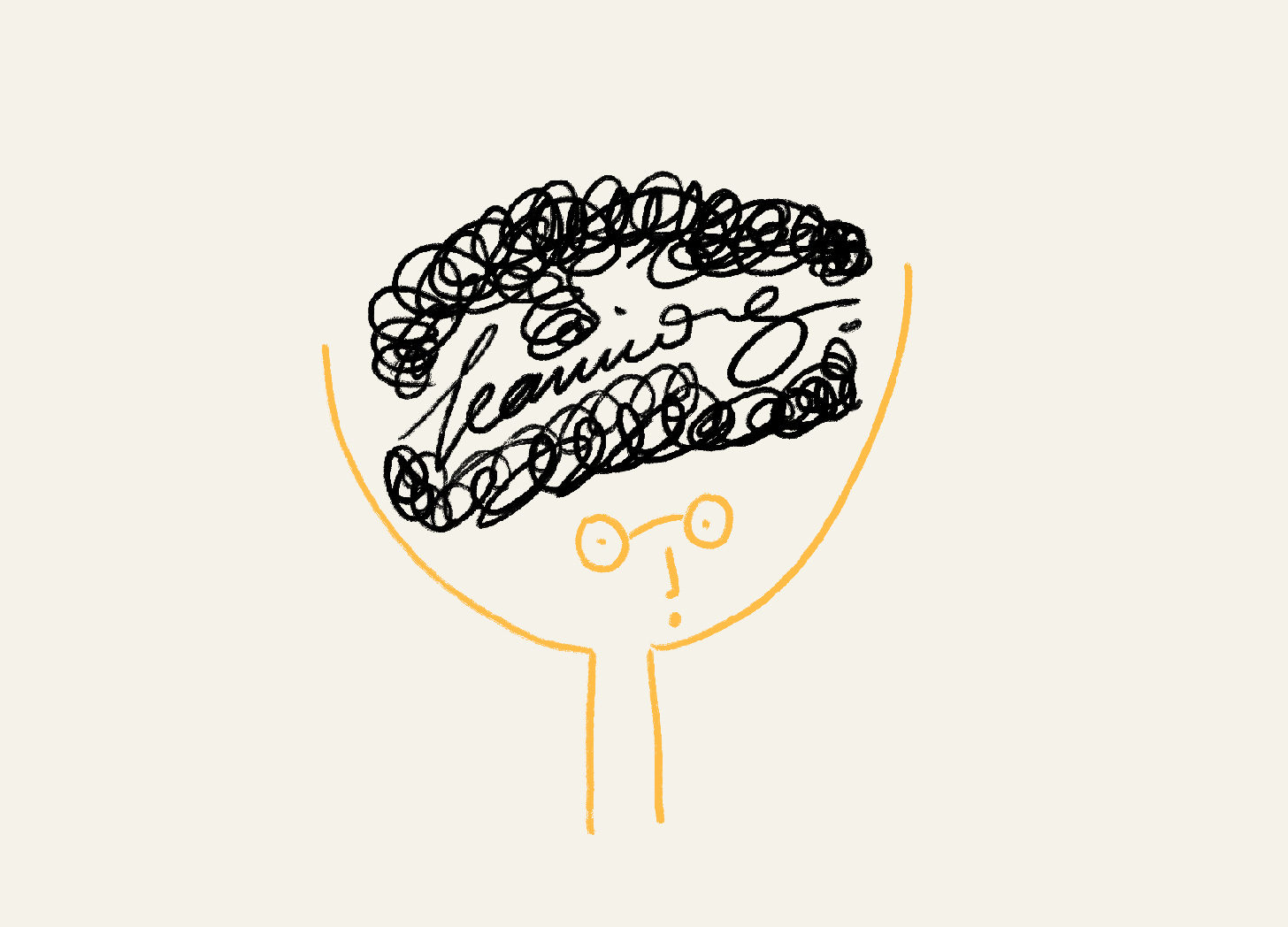
Learning is hard. And many of us forget that.
There was self-blame and self-doubt.
Why did I wait so long to learn this? Maybe I’m just too old to do this.
There were plenty of negative thoughts.
Why am I so slow? Why do I keep making the same mistakes? Am I just not good at this?
And there was also quite a good amount of pointless whining.
Why is driving a car so complicated? How are we expected to do so many things at once? Shouldn’t self-driving cars be more common by now?
It was a constant internal struggle.
Children are in some version of this state all the time. Hopefully with less negativity since they haven’t had as many years as I’ve had to get in their own way.
Adults, less so. Many of us are still learning, but in much smaller ways. They are more like add-ons, not entirely new skills from scratch. So we forget what learning actually feels like.
Since then, I’ve kept putting myself in that position. I’ve learned to cook, write, start a business, paint, do pottery, snowboard, knit, and crochet. All of them came with multiple phases of frustration. Wanting to give up, feeling like I wasn’t good at anything.
When our kids see us fail, try again, and move through the messy process of learning, they perceive it as a natural part of life. Something to work through, not avoid. Because there is no learning without struggle, no matter how smart or how capable we are.
I’m still not great at many of the things I’m learning. But I am now more aware of my own learning patterns. And that has helped me to be kinder to myself and more patient with others who are learning too.
When was the last time you learned something completely new? Not just to get good at it. But to remember what it feels like.
Related Posts:
Parents are shaping the invisible every day
Reclaiming what makes us human starts at home