

Systems Mapping
A Method to Make Sense of Complexity by Mapping Connections

Systems Mapping is a simple way of visualising how different parts of a situation are connected. Instead of looking at one issue in isolation, you map out the big picture view of the interactions between
people
environments
behaviours
influences
tensions/delights
In design, this is often used to make sense of complex situations where there is no one clear cause. By seeing the relationships between different elements, we collectively gain a clearer view of our current state and can more easily identify where we might want to focus our attention on.
Why this matters at home
At home, parents are often trying to fix different behavioural challenges without first understanding the specific system that has influence on our behaviours. Our behaviours are often shaped by what happened earlier, how people are feeling and the environment around them.
When we take a little time to map out the system that influences us, we start to see the bigger picture of how things connect. This helps us see where we might want to work further on or change.
I understand that some of you may not need a map to realise, for example, that your family needs less individual screen time and more family time together. But the act of mapping it out together is where much of the value lies.
Mapping things out together creates a shared, objective view. It shifts the dynamic from one person directing to everyone understanding and contributing to the solution.
This is a flexible tool that can be customised for your specific needs. Below are two examples of how we can use them at home.
Example 1: Designing family culture
When we begin working on our family culture, it helps to start with a connected view of your current system. For example, you might map out how your family spends time, and how each person relates to those activities. This brings clarity to your current priorities, understanding each other’s experience, identify what works and areas that you might want to adjust.
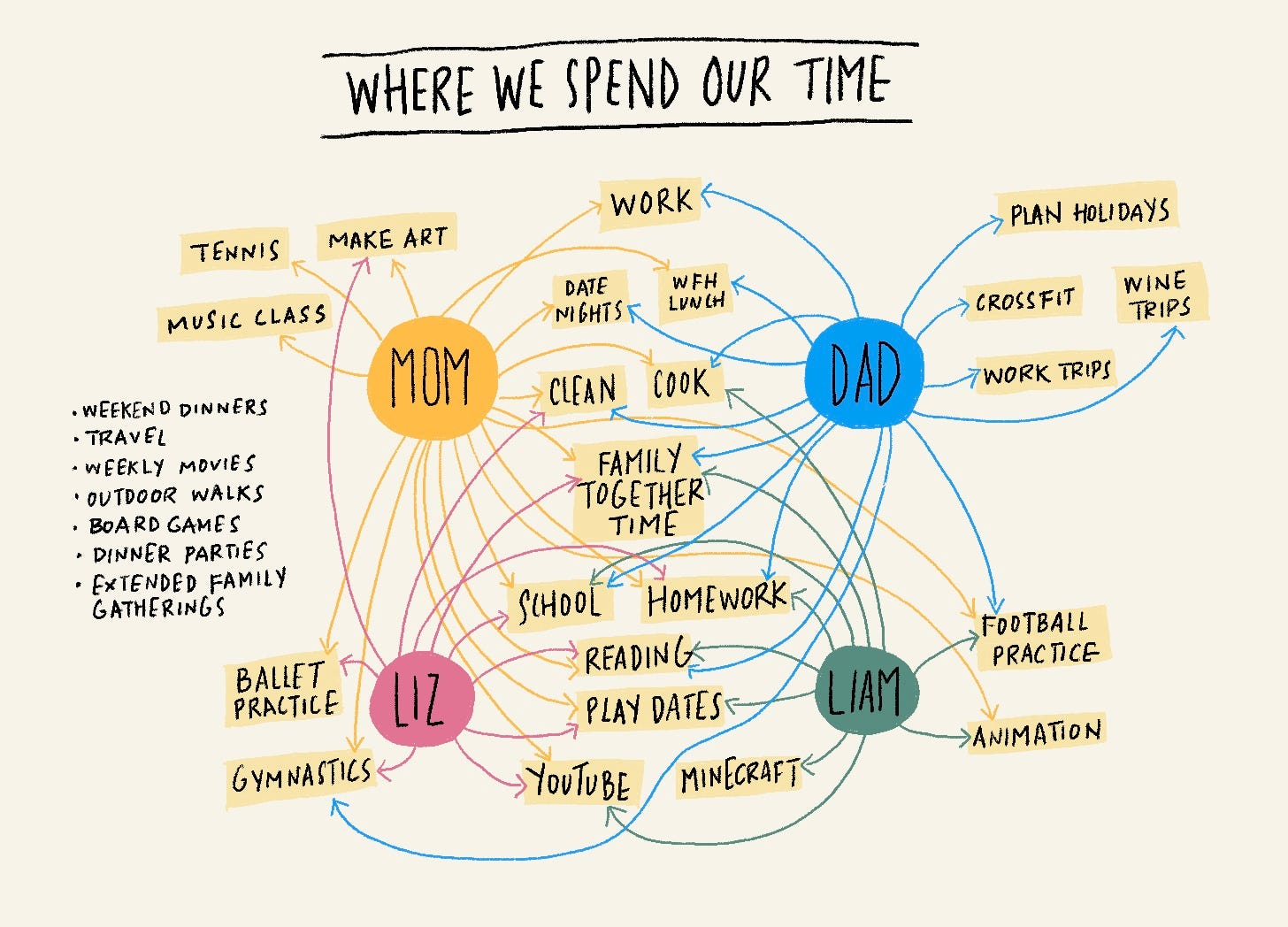
Key steps based on this example:
Identify the key people in your family
Identify key elements.
In this case, it’s activities. If the list gets too long, group similar ones together. You can use affinity clustering to help with this.Connect people and activities.
Talk through the experience and relationship as you map them.Discuss what stands out.
What’s working? What’s not? What might you want to improve?
Example 2: Understanding our relationship with screens
Our relationship with technology and our increasing reliance on it is a common challenge for many families.
One way to have a more objective conversation about healthier screen habits is to first map your current relationships with screens and then discuss what you might want to shift.
The examples below show how different family members may have very different relationships with screens and some reasons why.
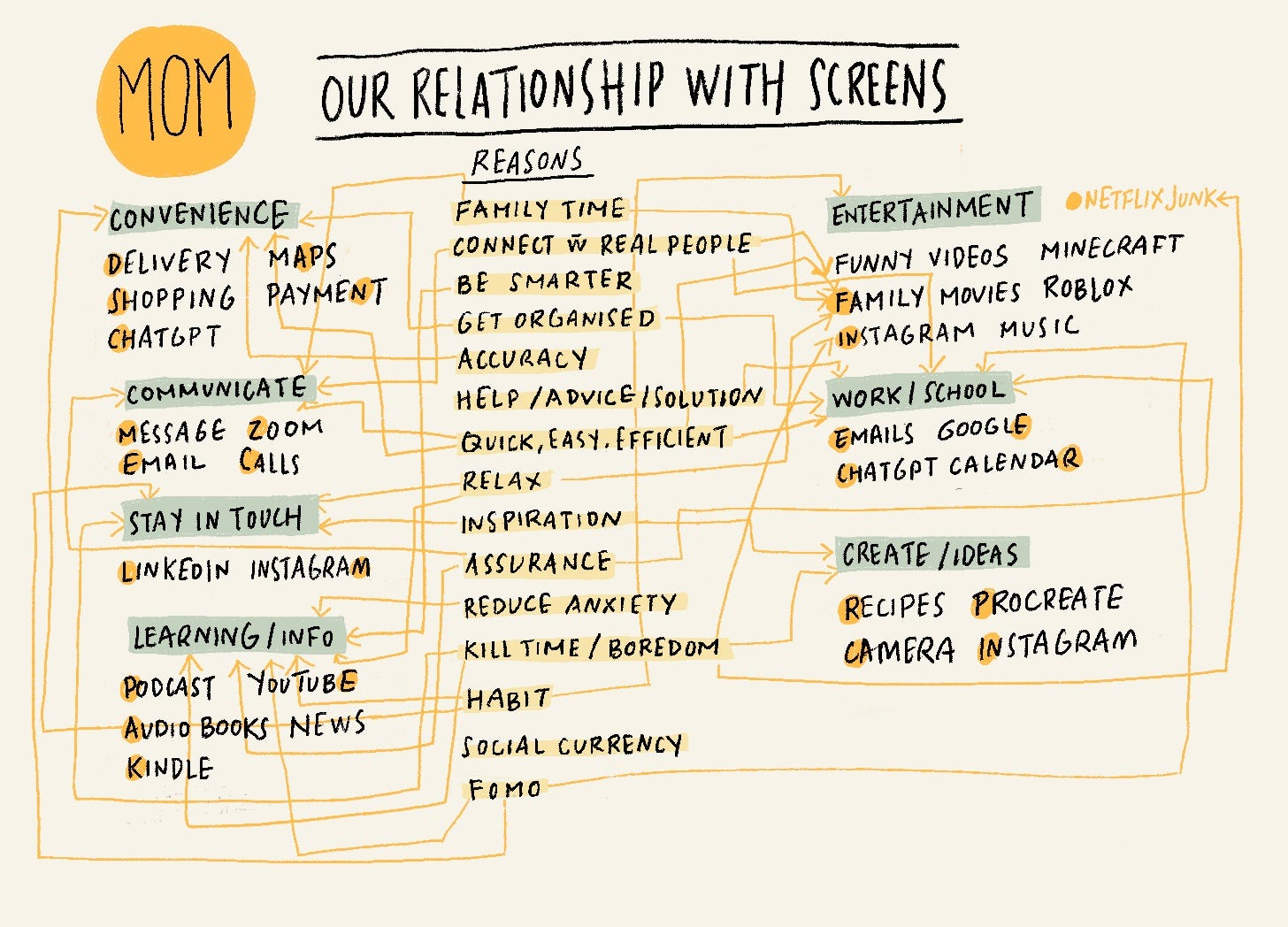
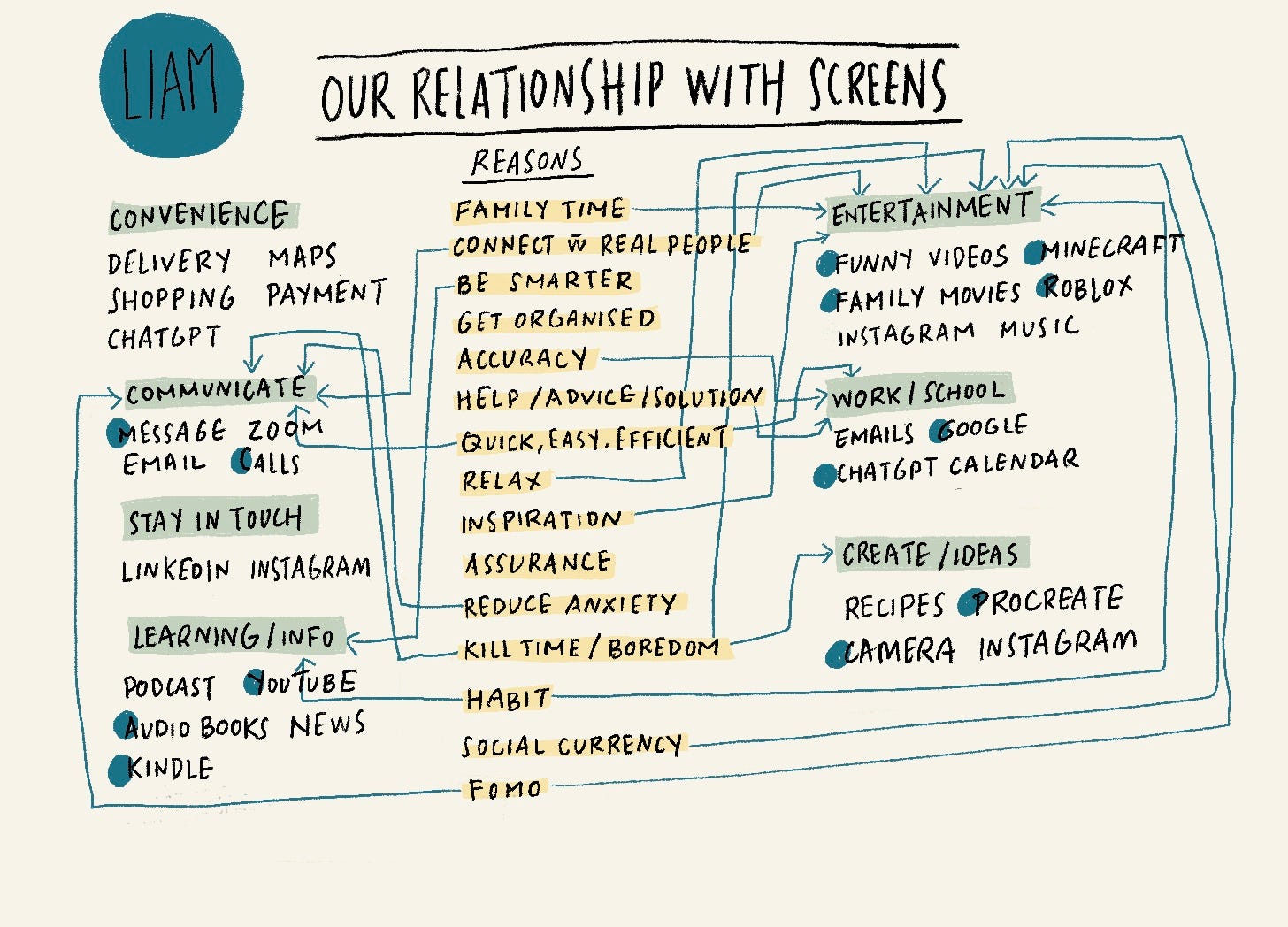
From these, you can discuss which types of screen use feel useful or meaningful, which are less healthy, what changes can be improved in the home, and what are some of the small changes each one can make.
Key steps based on this example:
Identify the different ways screens are currently used.
For example: delivery, minecraft, emailsCluster them based on the purpose they serve.
For example: entertainment, convenience, work/school, etcIdentify any deeper reasons behind the behaviour.
Or simply be more specific about why screens are used.
For example: habit, boredom, lack of time, escape, etcEach family member to identify their interactions and connect to the different reasons.
Add specific reasons or interaction if needed.Discuss what stands out.
What feels healthy? What’s working? What’s not? What might you want to improve together?
Mapping out connections at home helps us see the relationships with more clarity. That visibility helps us move forward more effectively, dig deeper into what might really be shaping the situation, and open up more thoughtful conversations.
Related Posts:
See all Tools & Methods