

Design, Family and Culture
Three words that are a natural fit, but rarely seen together.

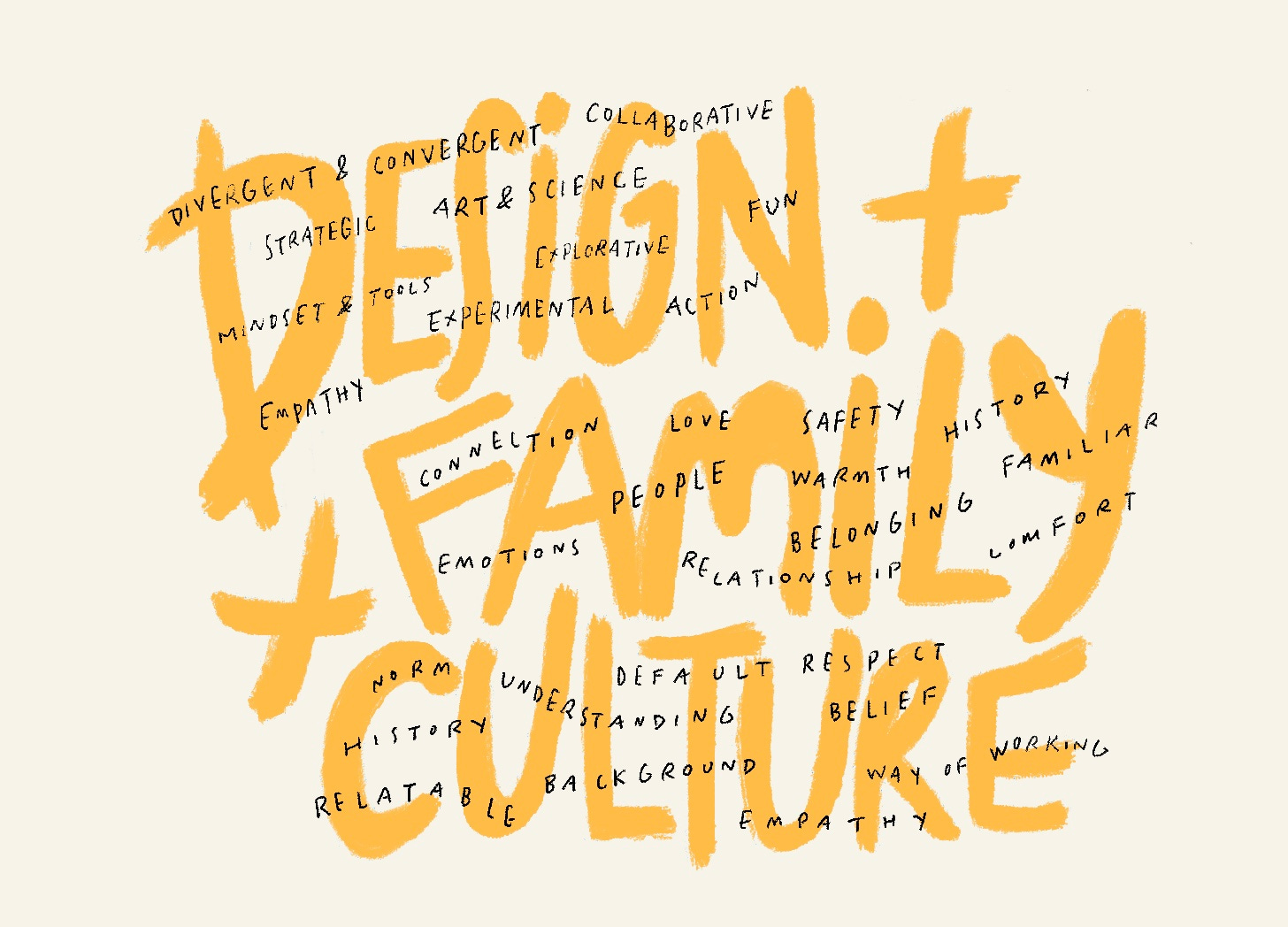
Culture Shapes us Everywhere
Culture is the invisible force that shapes how people live, learn, grow and connect, in society, at work, in communities, and of course, at home.
In most areas of life, culture is shaped by forces we have little control over. Society moves slowly. Workplaces shift at the pace of leadership. Communities evolve through many voices. We have the power to influence parts of it, with the hope of creating a ripple, but only a few do.
At home, things are different. It is the one culture most of us actually have control over. Parents care deeply and are already intentional in many moments, especially when handling specific challenges like device time, routines, homework or behaviour. But most of us were never taught to think about family life in a strategic or holistic way. So we make decisions moment by moment, without a bigger picture to guide them. And when life is busy, the daily rush, the stress and the habits we inherited often shape more of our culture than we realise.
Why Family Culture deserves our Attention
We may not be able to control how our children eventually turn out, but we do have a lot of influence over our beliefs, our behaviour, and the way we work together at home. That is the part we can shape with intention.
An intentional family culture acts like an invisible guide when life gets messy. It:
Anchors us to connection when we feel overwhelmed
Makes decisions easier because everyone knows the ‘why’ behind choices.
Reduces conflict because the intent is understood and agreed upon.
Builds belonging so everyone feels safe, seen, heard, and valued.
Supports growth by helping us live our values and work towards shared goals.
Family culture is not built overnight. It takes time, patience, and a good amount of self-work at the start. But it is the one cultural space where we get to write the brief. We get to design the journey. And when we do this with care, we bring our children along to learn the same skills, many of us never really got a chance to learn ourselves.
What Shapes Family Culture
Family culture has both visible and invisible parts. We don’t need to rebuild everything from scratch. We can start by building on top of what we already know.
People: Everyone brings strengths, needs and challenges. Children bring their stages of development. Adults bring their stories and baggage.
Values: What matters most to us. These need clarity and honest conversation.
Behaviours & Norms: The everyday habits that show what we truly value.
Environment: The physical and emotional space we create to support the way we want to live.
Experiences: How we interact, how we speak, and how we make each other feel.
Where Design fits at Home
Design gives us mindsets and tools to move from idea to action.
Design is centred on people. Everyone in the home matters and is considered.
Design is contextual. It helps us see how everything connects, and also lets us zoom in when something needs focused attention.
Design is collaborative. It helps us bring all voices into the conversation, not just the loudest or most stressed one.
As we begin to think about our culture at home, we can start small.
Notice what each person needs.
Look at our own patterns and what they say about our values.
See where our actions match, or don’t match, what matters.
Make one small shift, then watch and adjust.
That is a brief essence of a human-centered approach at home. We involve everyone. We listen. We bring our values into daily life. Without this bridge, family values become something we only recite like a school pledge, not something we live.